
Device control
We connect peripherals, sensors and control elements through firmware, defining state transitions and timing needs.
- Firmware
- Drivers and control logic
EMBEDDED SYSTEMS
Electronics, embedded software and communication. Explore the technology working together inside a charge.
Let’s develop your productFROM HARDWARE TO SOFTWARE. FROM CODE TO ENERGY.
We develop connected systems from electronic design and firmware to device communication and management software.
Local simulation · example 60 kWh battery · accelerated time. No connection to a real vehicle, charger or management service.3D vehicle model · Source and licenseEmbedded Systems and Firmware Development
We develop embedded software around the hardware and operating scenarios of the product. Sensing, control, communication and failure states are considered across the whole device.
From prototype to a field-ready product, hardware and software work should share the same requirements.
What we deliver
We connect peripherals, sensors and control elements through firmware, defining state transitions and timing needs.
We implement internal and external communication using supported interfaces and protocols, accounting for lost connections and invalid responses.
We design error reporting, device-state visibility and update needs, coordinating testing and releases with hardware revisions.
The work in context
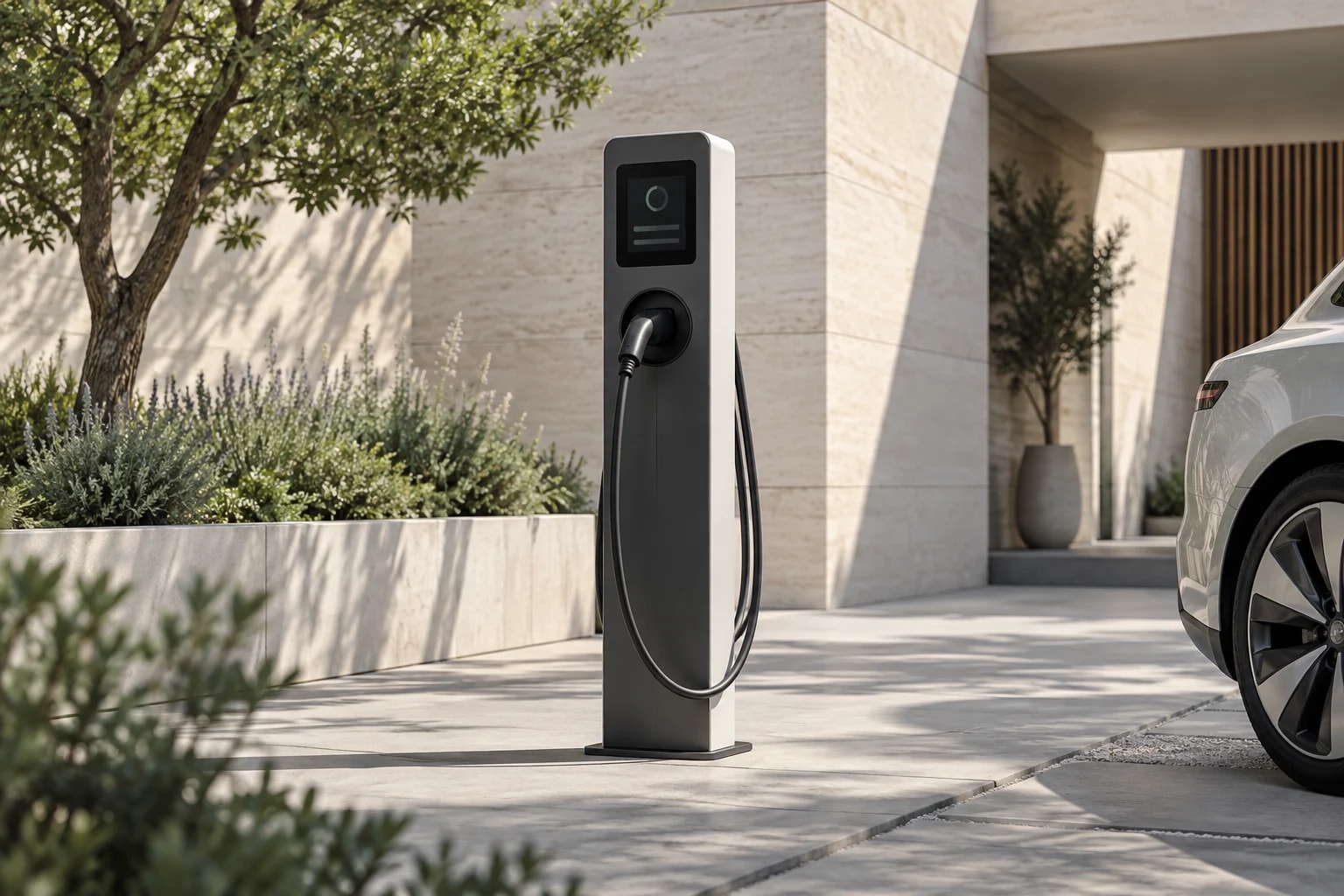
The charging example brings device control, temperature, energy transfer and communication with a central system together. Firmware coordinates these behaviors through defined states and conditions.
How we work together
Deliverables and the working plan are defined around the needs of your project.
Review hardware, functions and operating conditions.
Plan drivers, states and communication layers.
Develop behavior on hardware in controlled steps.
Test functional and failure scenarios and record findings.
Engineering in the details
Startup, operation, waiting and failure have explicit transitions.
Memory, timing and energy use are considered against hardware capacity.
Version information, diagnostic traces and update conditions follow product needs.
Common questions
We review hardware documentation, components, existing firmware and development interfaces. Available resources and device constraints define scope.
Yes. Hardware prototyping and firmware can be planned together around shared requirements.
Connectivity, memory, boot structure and recovery requirements must be assessed. The method depends on hardware capabilities and operating conditions.
Share your hardware, operating scenarios and communication needs.